

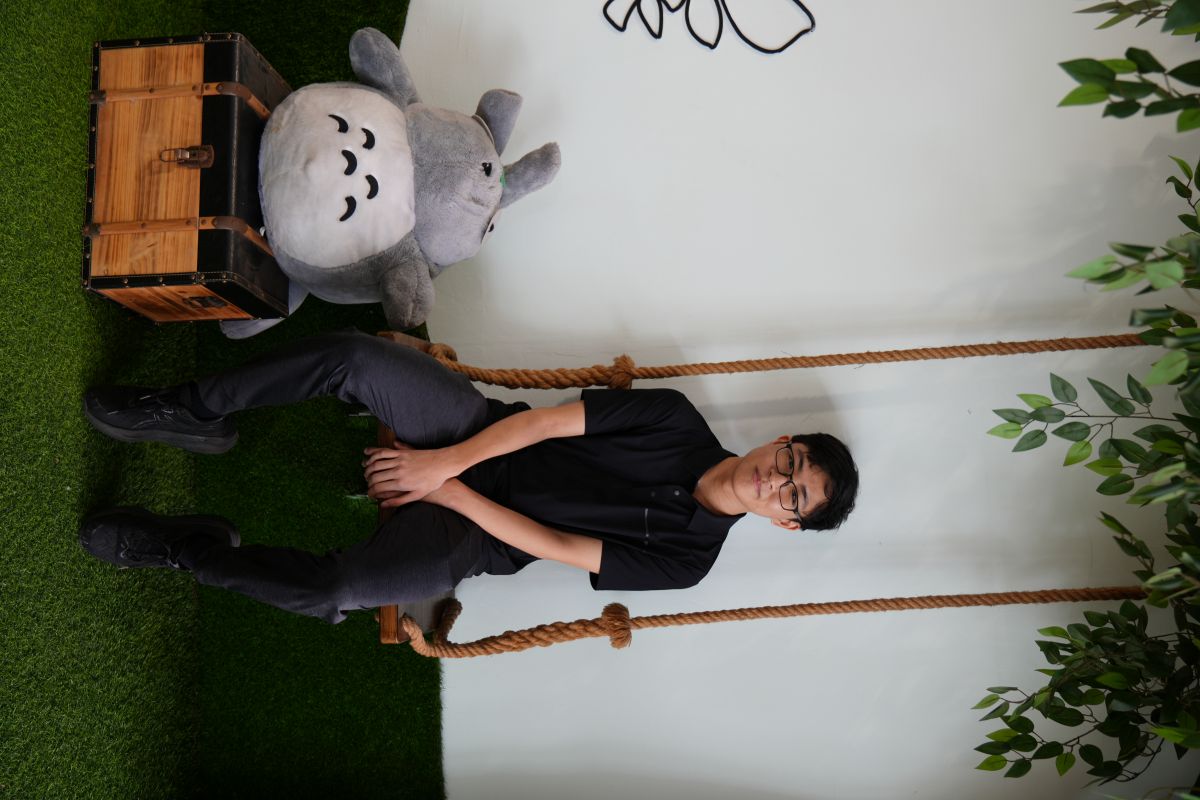
Abdel Hadi B Haidar (24S06)
More Than Grades: How Parents, Schools and Students Walk the A-Level Journey Together
The Junior College years are often framed as a purely academic marathon — long nights of revision, mounting pressure, and the pursuit of results that seem to define futures. Yet, for students navigating late adolescence, success is shaped just as much by emotional resilience, a sense of belonging, and the assurance that they are not walking alone. At Jurong Pioneer Junior College (JPJC), this quieter but vital dimension of student support is made visible through a strong and sustained partnership between the College, its teachers, and an actively engaged Parent Support Group (PSG).
This partnership is exemplified in the journey of Abdel Hadi B Haidar, a JPJC student whose junior college experience was shaped not only by academic guidance, but by the strong and consistent support of his family working closely with the college. His story offers a powerful illustration of how a strong partnership between parents and educators can create a nurturing ecosystem that enables students to grow confidently and holistically during one of the most demanding phases of their education.
Leading with Purpose: A Parent’s Commitment to Community
At the heart of the JPJC PSG is Ms Navy Tan, Chairperson of the PSG in 2025, and Hadi’s mother. When she was approached to take on the role, she agreed without hesitation. Having been actively involved in parent support initiatives since her child’s secondary school years, Navy viewed the position not merely as a leadership role, but as a meaningful extension of parenting itself.
“Being involved in the PSG brings us closer to our child,” she shares. “It helps us understand him better, and allows us to cheer him on throughout his A-Level journey.”
Her motivation is deeply rooted in family values. As parents, Navy and her husband believe that being present — not intrusive, but intentional — makes a difference. As students enter late adolescence and begin asserting independence, she recognises that the parental role must evolve.
“We must learn to step back, let go, and allow them to make their own decisions — and even allow them to stumble,” she reflects. “That’s how resilience is built. At the same time, we continue to stand by them with encouragement and unconditional love.
This balance — independence supported by love — defines both her parenting philosophy and her leadership approach within the PSG.
Strengthening Support Beyond the Classroom
Under Navy’s leadership, the PSG continued the strong groundwork laid by previous chairpersons while expanding its scope and operations. Drawing on her professional background in IT, she introduced more efficient systems to support PSG initiatives. For instance, student verification for the Pre-Exam Dinner orders were streamlined through automated software, replacing manual pen-and-paper processes.
These operational improvements enabled the PSG to organise more activities over the past year — a development Navy attributes strongly to the College’s support.
“The fact that we were able to organise more activities last year is a testament to the College’s unwavering support,” she shares. “That support enabled my team and the PSG to host successful events for both parents and students.”
She describes her experience of working closely with the College leadership, teachers, and fellow parents as deeply fulfilling — one marked by trust, shared purpose, and open communication. The PSG, she explains, complements the College by aligning closely with its objectives, strengthening programmes, and enhancing student well-being.
“At its core, the PSG serves as a bridge between parents and the College,” Navy explains. “Because it is run by parents for parents, our responsibility is also to invite others to step forward and contribute their time, expertise, and talents.”
Building Belonging Through Meaningful Initiatives
Among PSG’s many initiatives, two stand out for their impact on community-building.
The J1 Parents’ Connect Session supports families as they transition into the junior college environment. For many parents, the JC landscape is unfamiliar, and the session provides reassurance, connection, and clarity. Parents are introduced to PSG’s role, its activities, and how they can become involved.
Another flagship initiative is the annual Pre-Exam Dinner (PED) — a deeply cherished tradition at JPJC. Held over several nights during students’ night study sessions between July and September, the PSG provides dinner bentos when the college canteen is closed. Parents volunteer on-site, ensuring students receive a warm, nourishing meal during one of the most stressful periods of the academic year.
“It warmed the students’ hearts to see parents volunteering their time,” Navy shares. “It showed them that their parents genuinely care.”
Beyond nourishment, the PED sends a powerful emotional message: students are seen, valued, and supported by an entire community. This visible expression of care strengthens bonds between parents, the College, and students, reinforcing a culture of empathy and belonging.
A Student’s Perspective: Confidence Through Supports
For Abdel Hadi, these efforts were not abstract ideas, but lived experiences. He recalls how the PSG-sponsored Pre-Exam Dinner provided both practical and emotional support during intense revision periods.
“It gave me and my schoolmates the energy and encouragement we needed,” he shares. “It helped me stay focused and reminded us that our parents were cheering us on.”
Hadi’s journey at JPJC was also marked by significant personal growth beyond academics. Despite joining the English Drama Society later than many of his peers, he embraced the challenge wholeheartedly. Through dedication and perseverance, he contributed meaningfully to major college productions such as Internal Showcase 2025 and Artistic Reverie 2025.
His performances at the Literature Symposium, featuring scenes from The Changeling and Hard Times, reflected growing confidence, adaptability, and a strong passion for the humanities. Teachers observed not just improved performance skills, but a willingness to take risks and express himself creatively — traits nurtured within a supportive environment.
College-led guidance further supported his development. A talk conducted by the college counsellor on university applications provided clarity and reassurance about post-A-Level pathways, while a visit to the NUS Mathematics Department inspired him to pursue his academic interests with greater determination.
Yet, when asked what made the greatest difference during stressful moments, Hadi points to the steady presence of family support.
“To be continuously encouraging, inspiring, motivating, and giving heartening hugs whenever I felt stressed made all the difference,” he reflects. “It reminded me that I wasn’t alone.”
Shared Responsibility, Holistic Growth
Hadi’s journey illustrates how a strong parent–college partnership can create a nurturing ecosystem that empowers students to grow holistically. Supported by his family and guided by his teachers, he navigated the demands of junior college with confidence, developing not just academically, but socially and emotionally.
This shared responsibility — grounded in trust and collaboration — lies at the heart of the PSG’s work at JPJC. By aligning parent-led initiatives with the College’s vision, the PSG strengthens college culture and enhances students’ overall experience.
As A-Level results are released, Navy offers a message that speaks to both success and uncertainty.
“Every stumble, every triumph, every moment of growth reminds me that the best is yet to be — not just for our children, but for us as parents walking alongside them.”